
Many defense contractors are watching the federal CMMC rollout and waiting for certification requirements to appear in their contracts.
That may seem reasonable, but it overlooks the deadline that could affect their business first.
Your earliest CMMC deadline may not come from the government. It may come from a prime contractor or another major customer—and it may have already arrived.
The warning signs are easy to overlook
It often starts with a supplier questionnaire, portal notification, or email asking for information such as:
- Your current CMMC status
- Your SPRS score
- The date of your most recent assessment
- Your expected certification timeline
- Who is responsible for managing compliance
These requests can look like routine paperwork, especially when they arrive during an already busy week. Someone provides a partial response, forwards the request internally, or decides to come back to it later.
Then nothing happens.
There is no failed assessment and no formal notice that the company has been disqualified. The next opportunity simply goes to another supplier, or an existing customer becomes harder to retain.
The contractor did not necessarily lose the work because it was noncompliant. It lost because another supplier was easier to trust.
The federal timeline is only one part of the picture
The government’s CMMC implementation schedule matters, but it should not be the only timeline driving your decisions.
Prime contractors are responsible for managing risk throughout their supply chains. They do not have to wait for CMMC to appear in your next contract before evaluating whether your organization can protect sensitive information.
A prime can establish its own cybersecurity expectations as a condition of bidding, receiving an award, or remaining an approved supplier. Some are already asking subcontractors to demonstrate their readiness before certification is formally required.
That means most defense contractors are operating against two different deadlines:
The federal deadline: When a CMMC requirement officially appears in a contract or solicitation.
The customer deadline: When a prime or other customer expects evidence that your company is prepared—or begins choosing suppliers that can provide it.
Whichever arrives first is your real deadline.
Readiness is becoming a business issue
CMMC is often treated as an IT or compliance project. It is both, but it is also a revenue and customer-retention issue.
A serious readiness program can take 12 to 18 months, depending on your current environment, documentation, resources, and the amount of remediation required. Waiting does not reduce the amount of work. It only gives your team less time to complete it.
That can lead to rushed technology decisions, incomplete documentation, higher remediation costs, and unnecessary disruption.
More importantly, it can make your company appear uncertain when a customer asks a basic question: Are you ready to continue supporting this work?
Your customers are not only evaluating whether you can pass an assessment. They are deciding whether they can confidently include you in future programs.
You do not need to be finished to be credible
The good news is that most customers understand their suppliers are at different stages of the process.
They are not necessarily expecting every contractor to be certified today. They are looking for confidence that you understand your current position and have a realistic plan to move forward.
A credible response should clearly explain:
- Where your organization stands today
- Whether your SPRS score is current and accurate
- What gaps still need to be addressed
- What actions are underway
- When major milestones are expected
- Who is accountable for the program
An honest status backed by a defined plan is significantly stronger than a vague assurance that CMMC is “being handled.”
You do not need to pretend the work is complete. You need to demonstrate that the work is understood, owned, and moving.
Three steps to take now
1. Review your most recent customer request
Find the latest cybersecurity questionnaire, supplier portal notice, or compliance request sent by a prime or major customer.
Look beyond the response deadline. Pay attention to what the customer is asking and what those questions reveal about its future expectations.
2. Validate your SPRS score
Confirm that your score is current, properly supported, and reflects the way your organization operates today.
If the score is outdated, inaccurate, or based on controls that are not fully implemented, address that before relying on it in a customer response.
3. Create one clear readiness statement
Develop a concise summary that includes your current status, SPRS score, remediation plan, target dates, and program owner.
Use it as your internal source of truth. It can then be adapted to each customer’s questionnaire or supplier portal without rebuilding your answer every time.
Don’t wait for the contract clause
The federal rollout will continue to shape CMMC requirements, but it may not determine when your business feels the impact.
Your customers are already evaluating supply-chain risk. They are already asking questions, comparing suppliers, and deciding who they can depend on.
The companies in the strongest position will not necessarily be the ones that finished first. They will be the ones that understood the risk early, answered honestly, and showed a credible path forward.
Your first CMMC deadline may belong to your prime—not the government.
Not Sure Where Your CMMC Readiness Stands?
• Clarify your CUI boundary
• Identify priority risks and evidence gaps
• Get a practical next-step roadmap
Recent Posts in CMMC Readiness

CMMC Readiness Is Becoming a Supplier Qualification Issue—Not Just a Compliance Deadline

Your CMMC Deadline May Arrive Before the Government's

Why Procrastinating on CMMC 2.0 Is Your Most Expensive Mistake
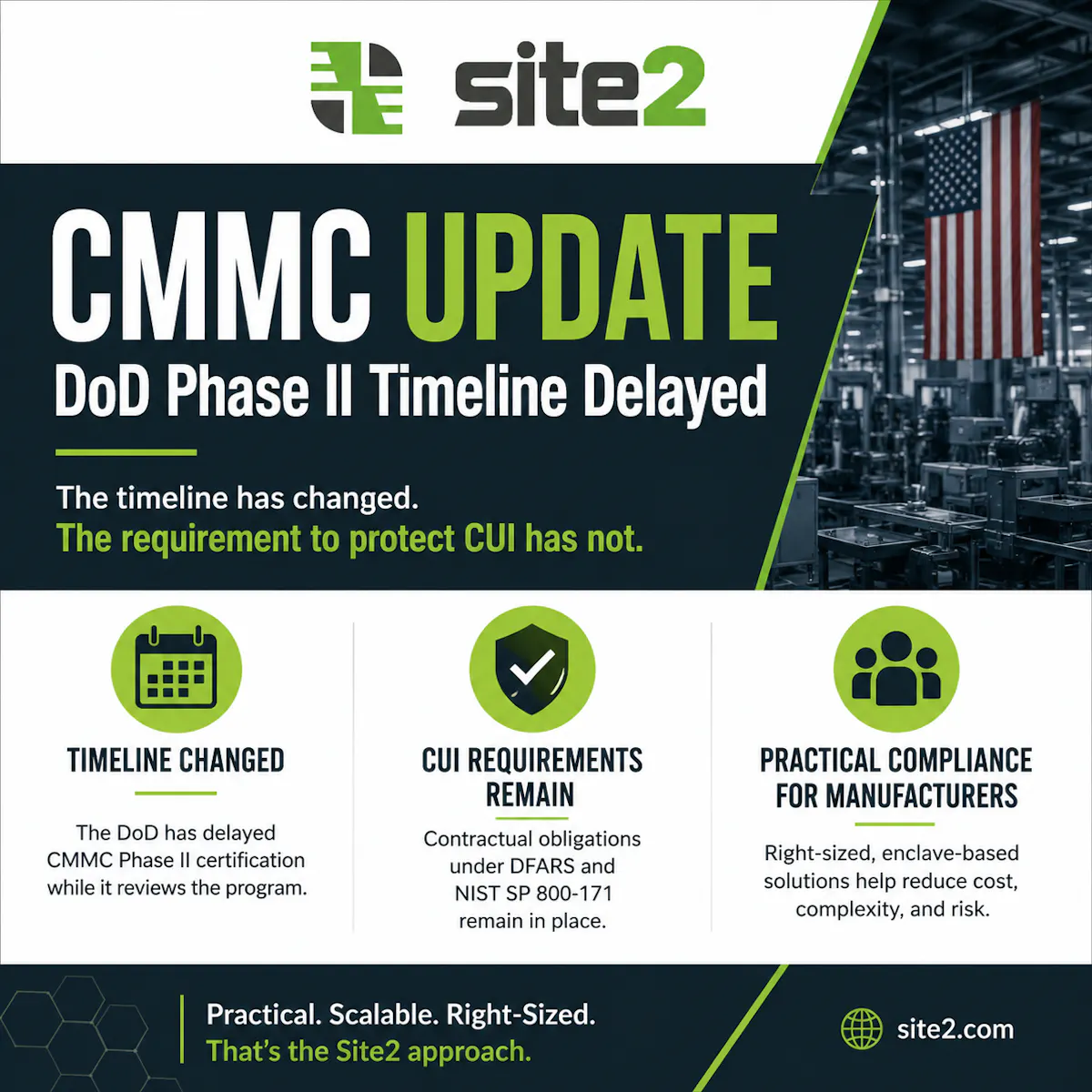
CMMC Update: What the DoD's Phase II Delay Means for Defense Contractors